I have missed you. And I have missed wine. I have missed this time to taste, research and write. What has kept me from you? The day I passed my Certified Specialist in Wine (CSW) exam on August 20, 2019, I also found out I was pregnant! And even before that I hadn’t been able to write for a while since I was constantly studying for the certification. It feels like a year since I was able to indulge my taste buds and write to you. But throughout the journey of my CSW and then my pregnancy and the birth of our amazing baby boy, I have kept a small part of my brain (and a Google Keep list) with ideas for tasting and learning when it was time to come back to you. But first, I must introduce baby Fitz!

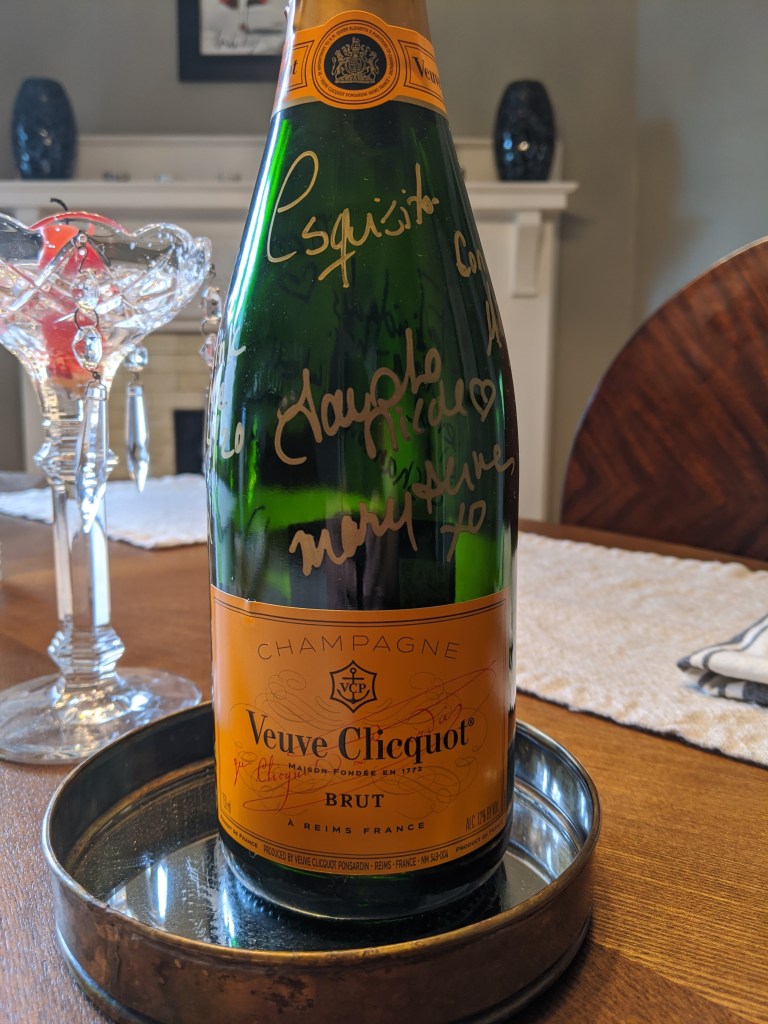
And of course my re-entry to the world of wine is a very special bottle of Veuve Clicquot signed by my mother and girlfriends as a gift at our baby shower. AND I had it on my first Mother’s Day. I also wore a matching Mom/Baby PJ set (but here I will use SOME self control and not post a photo to prevent darling Fitz any embarrassment beyond the above).
Back to the wine. Since I didn’t purchase the bottle, I’m not posting the price, but I will share the tasting notes! It is a Veuve Clicquot brut Champagne (here are nerdy details on Sparkling wine) non-vintage. Absolutely a classic Champagne and very consistent in quality, Veuve was probably my first real French Champagne. There are different labels (this one is called the Yellow Label) for different levels of quality, and is considered the signature wine for the house. A few facts about Champagne:
- It can only come from the Champagne region of France. All other wines with bubbles are considered sparkling, despite most people calling all sparkling wines Champagne (similar to calling all bandages Band-Aids). Perhaps my favorite region in the world for sparkling wine is actually just next to Champagne in Burgundy. They call their sparklers “Cremant de Bourgogne” and I strongly encourage you to try a couple!
- The Champagne maker’s brand is called the “house,” hence Veuve Clicquot is the house that makes the wines.
- Brut means dry – and a brut Champagne has enough acid to pair with many foods. Yes, pair your Champagne with food! It’s not just for toasting at events. It’s a wine you drink with dinner. We had ours with sushi (a dry Riesling or Pinot Gris would also have been nice).
- Most Champagne actually is made from a blend that includes 2 red grapes – what?!?! The juice is pressed and removed from the skins right away, so you don’t have a red wine, you see only the clear juice. Typically you will see the blend contain Pinot Noir (red), Pinot Meunier (red), and Chardonnay. Veuve’s Yellow Label is made from this blend. Other grapes may be included in small quantities; fine producers will share their blends on the label or technical sheets. Most of the wines I review are budget wines (under $25) so you may not see the grapes listed on the labels.
- Most Champagnes do not list a vintage. It is common to blend many vintages together to achieve a consistent style for the house. This is also the case for Veuve’s Yellow Label.
- Look: Clear, Pale, Lemon, small bubbles
- Smell: Clean, Medium Intensity, Lemon, toast, honey
- Taste: Dry, Medium acid, no tannin, Medium body, Lime, toast
- Notes: Low alcohol, Medium finish, Excellent quality, ready to drink, balanced
So CHEERS my friends, I am excited to be back in the world with you, tasting, smelling, making notes, doing research and learning.
 CorkProf
You’re going to doubt me, but I have evidence that I shipped a baby gift mere moments before this showed up in my inbox. You’re going to think it’s not a coincidence…but it is.
Glad to have you back! Hope all is well.
Sent from my iPad
>
LikeLike